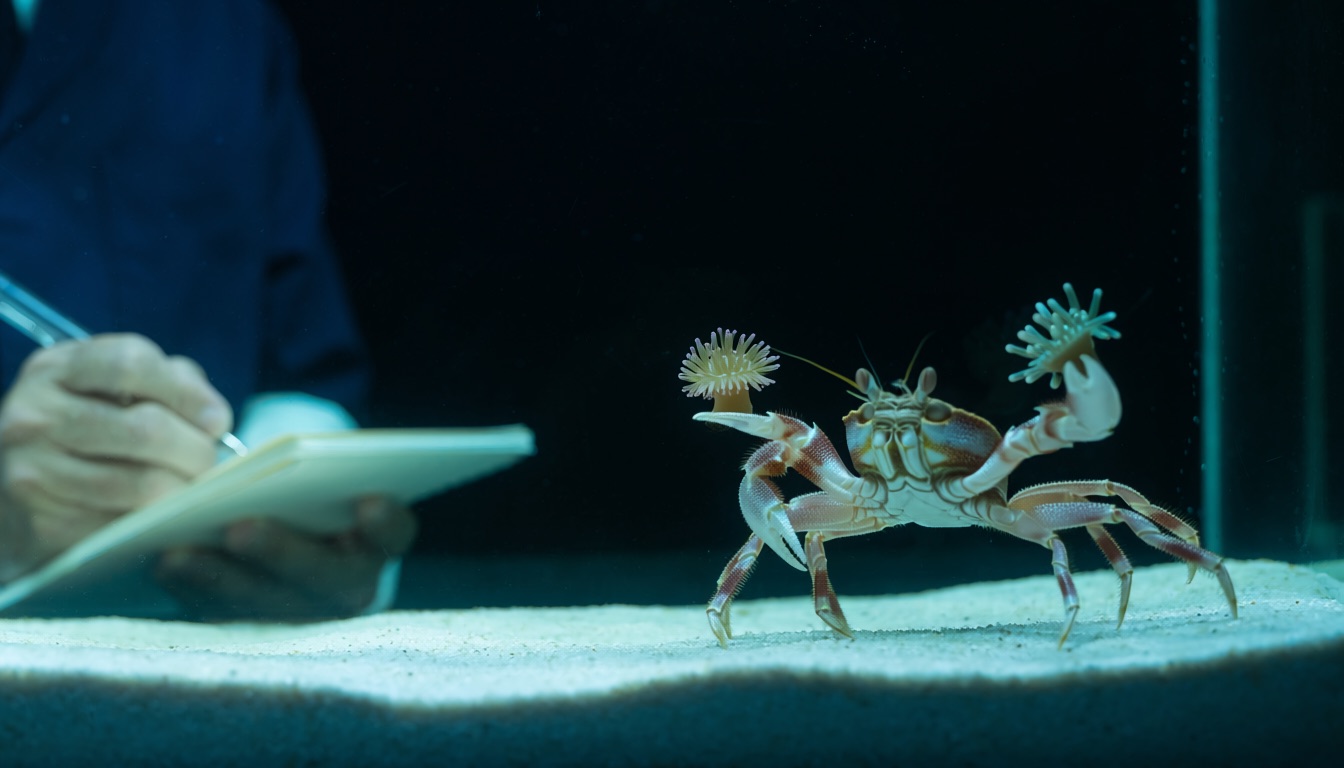
A boxer crab holding a sea anemone in each claw
Photo: Eliot Ferguson / Wikimedia Commons (CC BY-SA 3.0)
Research

Boxer-Crab Research

A tiny crab carrying two living “pom-poms.”
From observation to nuclear-genome analysis.

What is it?

What is a boxer crab?

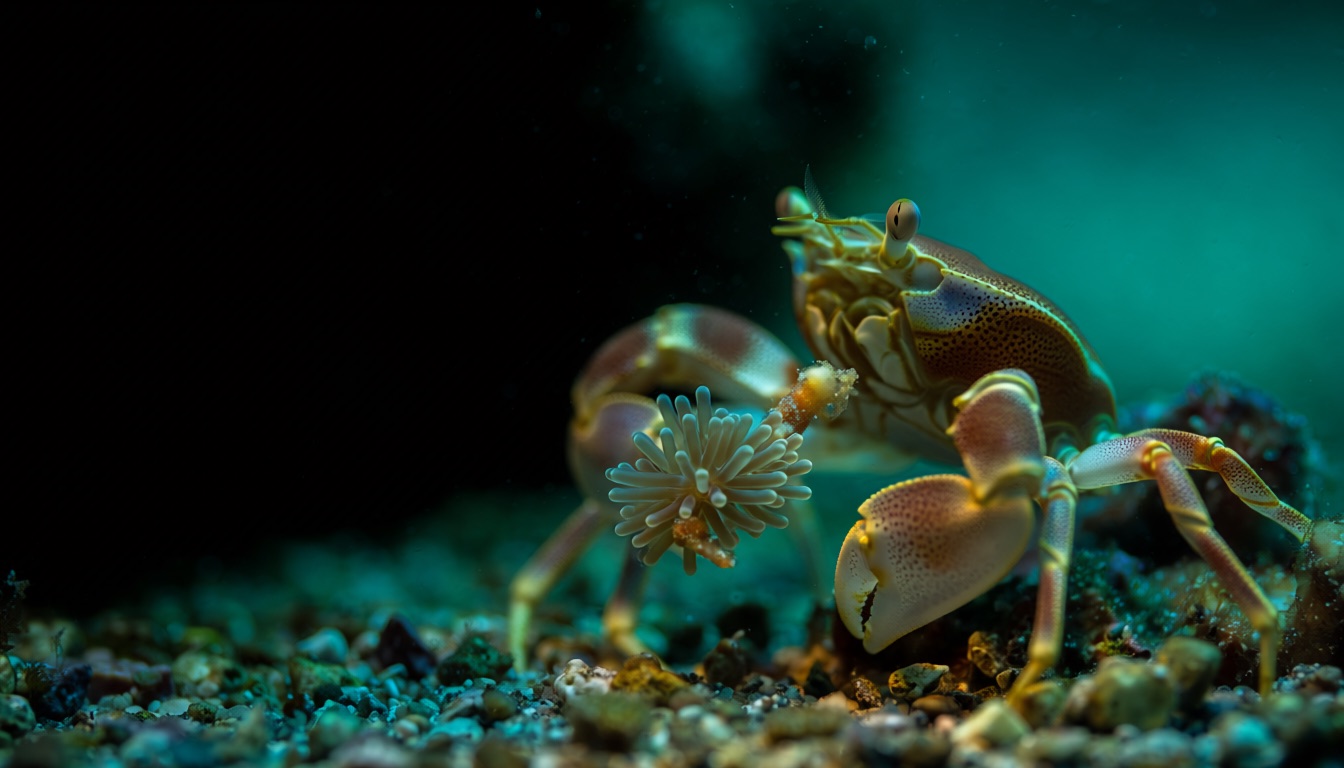
Lybia tessellata is only one to two centimetres across. Its defining behaviour is carrying a small sea anemone in each claw, raising them like a pair of cheerleading pom-poms when threatened.

The animal is also called a pom-pom crab—an appealing appearance that conceals a remarkably complex relationship between two species.

Mystery 01 — One of the few crabs known to use another organism as a tool. Much about how and why it does so remains unresolved.
A boxer crab holding its sea anemones among rocks
A boxer crab presenting both anemones
Photo: Elisabeth Morcel / Wikimedia Commons (CC BY-SA 4.0)
Size1–2 cmroughly coin-sized
FamilyXanthidaegenus Lybia
HabitatWarm, shallow seasPacific and Indian Oceans
NicknamePom-pom crabthe underwater cheerleader
The mysteries

A small crab. Large questions.

Behind its charming appearance is a largely unexplored system of tool use, physical adaptation and interspecies dependence.

01

A tool-using crab

It uses sea anemones as weapons and tools, and can divide them to preserve a matched pair.

02

A form not seen in the wild

Repeatedly being held in a claw changes the anemone's colour and shape.

03

Symbiosis—or exploitation?

Whether both organisms benefit, or one is primarily being used by the other, has long remained unclear.

2019 – 2021 · High school

Three years of early research
— From curiosity to evidence

I first encountered the crab in a National Geographic feature. With fellow members of the Salesio Gakuin biology club, I then spent three years keeping, observing and experimenting with the species as the lead author of our paper.

KEY FINDING Local species Outside range
The crab accepted an anemone species from outside its natural range
Key Finding

Evidence that the crab may not select one species

The crab accepted an anemone whose natural range does not overlap its own, suggesting it may take whatever suitable anemone is locally available rather than relying on one fixed species.

BLEACHING Healthy Pressure physical stress Bleached
Continuous pressure → fewer symbiotic algae → bleaching
Discovery

Explaining bleaching at tissue level

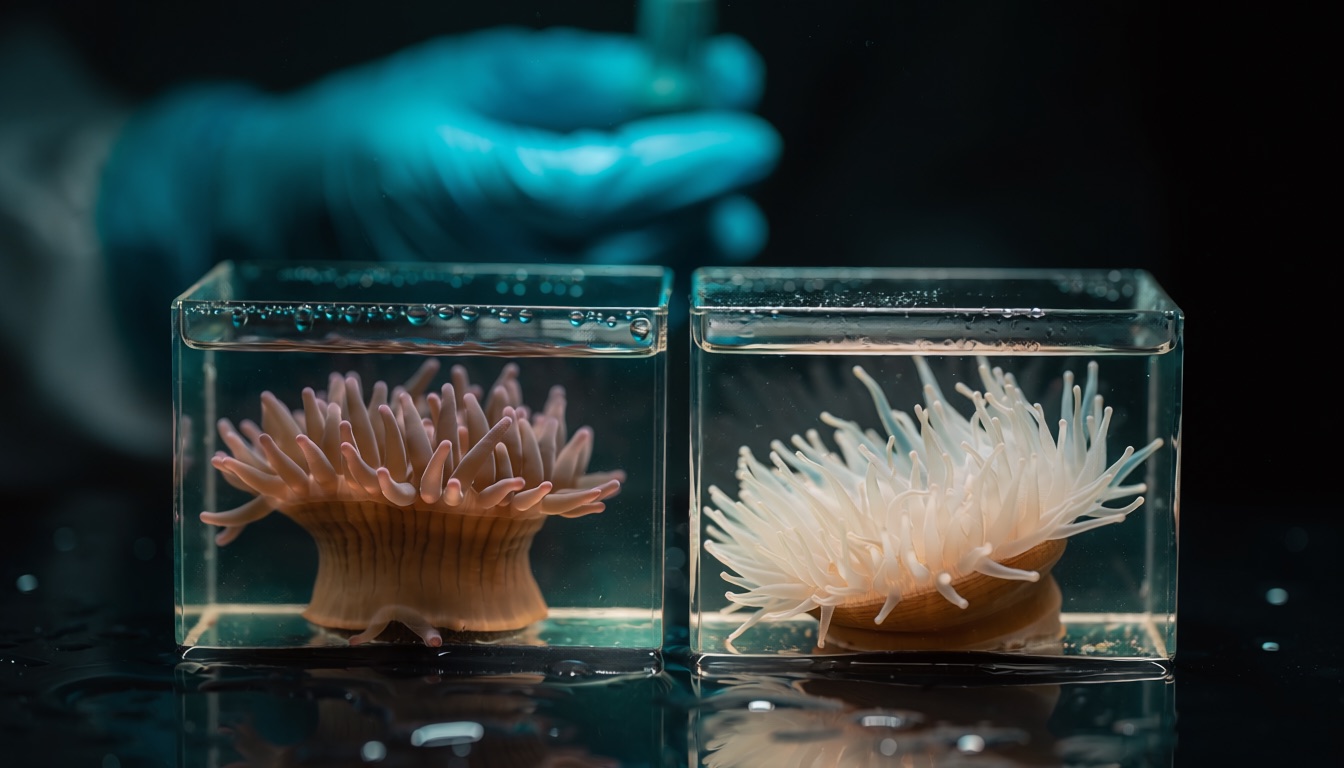
Tissue sections showed that areas held most tightly contained fewer symbiotic algae. The evidence indicates that bleaching is driven primarily by continuous physical stress.

RELATIONSHIP Crab Anemone
The crab benefits; evidence for the anemone's benefit is limited
Conclusion

Commensalism—or something closer to predation

Starved crabs ate the anemones they carried; removed anemones showed little remaining regenerative capacity; and no food transfer was detected. Together, the experiments point to commensalism with little benefit for the anemone, or a relationship approaching predator and prey.

10 experiments

Ten experiments, one connected question

Outside-range speciesAccepted an anemone from beyond its natural range
Emergency foodAte the carried anemone when starved
A feeding toolUsed the anemone to move attached food toward the mouth
BleachingColour shifted from blue-violet to white after being carried
Reduced regenerationRegenerative capacity remained very limited after removal
No observed dischargeNo cnidocyte discharge was confirmed in carried individuals
Cause of bleachingThe most compressed tissue contained fewer symbiotic algae
No food transferGFP tracing detected no scraps reaching the anemone
Movement speedChanges with habitat, suggesting a possible role in mimicry
Possible selectivityOne highly toxic species was not accepted
Awards
JSEC 2020 — Award for Excellence
Japan Science & Engineering Challenge
Marine Challenge — JASTO Award
National marine-research conference
Now · University

Now — At university
Reading the nuclear genome

Graduation research

Reading the blueprint of an unusual behaviour—
one sequence at a time.

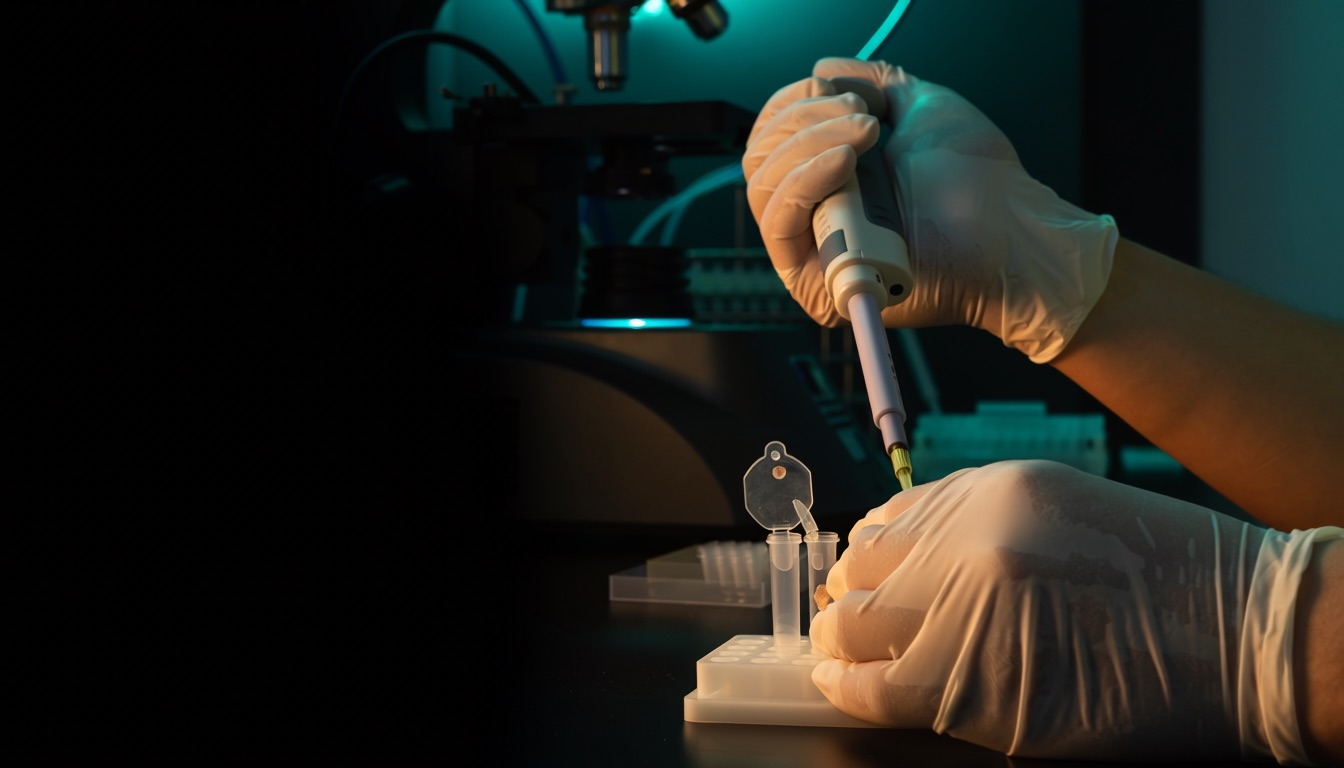
The nuclear genome of the genus Lybia is not yet registered in any public database; only mitochondrial-genome data are currently available (Gries et al. 2023).

Producing that sequence could create a genuinely new public dataset and bring us closer to the genetic basis of tool use and life with an anemone. Beyond this small crab, I hope the work can eventually contribute to pharmaceutical and life science.

Uncharted sequence
No registered nuclear genome for Lybia
mtDNA only
Existing public data are mitochondrial (2023)
Behaviour genes
Searching for the blueprint behind unusual behaviour
Read more

Related Coverage

A selection of interviews and reports about the research and the path behind it.